
Sea-Doo Winterization at Energy Powersports: Why Oakville Riders Trust Us With Their Off-Season Prep

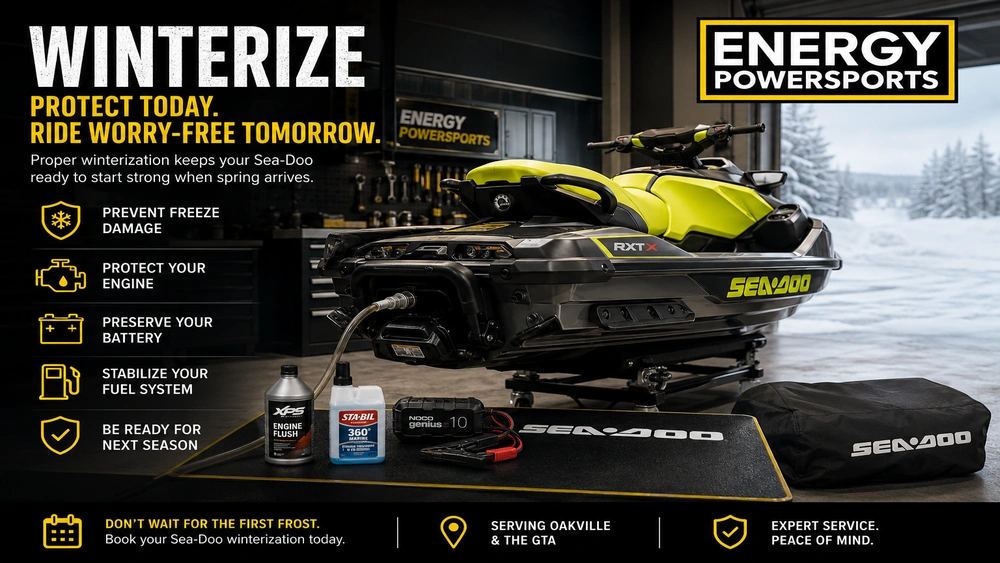
Why Winterizing Your Sea-Doo Matters
A Sea-Doo that sits through an Ontario winter without proper preparation is exposed to more risk than most owners realize.
Energy Powersports has been winterizing Sea-Doos for owners across Oakville and the surrounding GTA for years, and the pattern is always the same: the watercraft that get flushed, fogged and stored properly in the fall are the ones that start on the first pull come spring. The ones that don't get serviced are the ones that end up back in our service bay in May with a much bigger repair bill.
Water left inside the engine, exhaust system or cooling passages can freeze and expand, and expanding ice doesn't care whether it's inside a block, a hose or a manifold.
Left untreated over several months, a Sea-Doo can face:
- Cracked engine blocks or exhaust components from frozen water
- Corrosion inside the engine from old fuel and moisture
- A dead or damaged battery by spring
- Fuel system varnish and clogged injectors from stale gas
- Mould, odour and mildew inside the hull from trapped moisture
None of these problems are guaranteed to happen — but all of them are common, and all of them are avoidable with the right pre-storage service.
Two Sea-Doos of the same model and the same age can come out of winter looking very different. One was flushed, fogged, stabilized and stored properly. The other was parked in a garage in November and forgotten about. Only one of those units starts on the first pull in May.
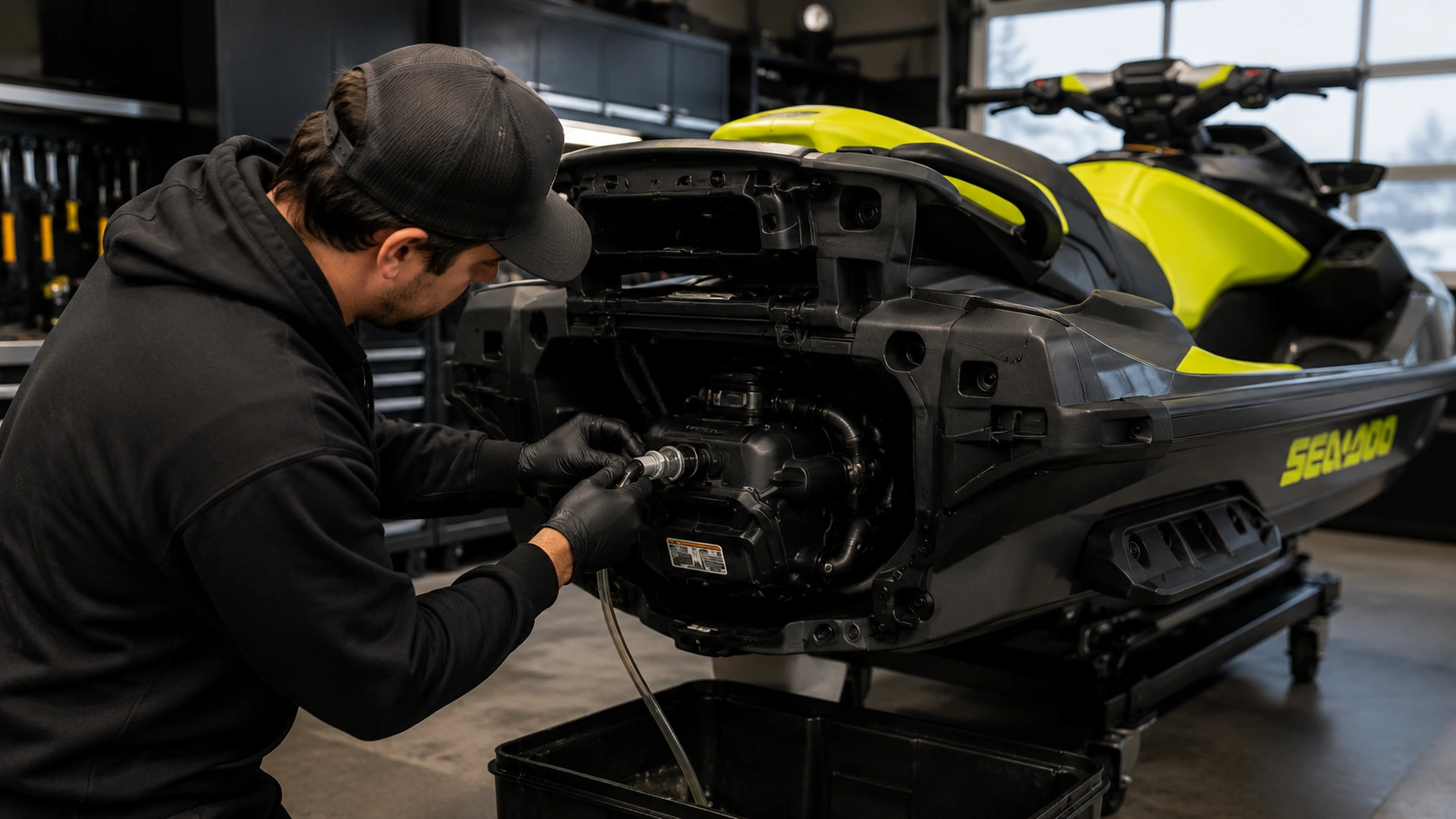
What Happens When You Bring Your Sea-Doo to Energy Powersports
Winterizing a Sea-Doo isn't a single task — it's a checklist, and the Energy Powersports service team works through every item on it so you don't have to.
Here's what our technicians take care of when your Sea-Doo comes in for winterization.
Flushing the Cooling System
Sea-Doos use water drawn from the lake or river to cool the engine. Before storage, that system needs to be flushed with fresh water to clear out sand, salt, weeds and mineral deposits that build up over a season of riding.
Any water left sitting in the cooling passages after flushing is exactly what freezes and cracks components once temperatures drop.
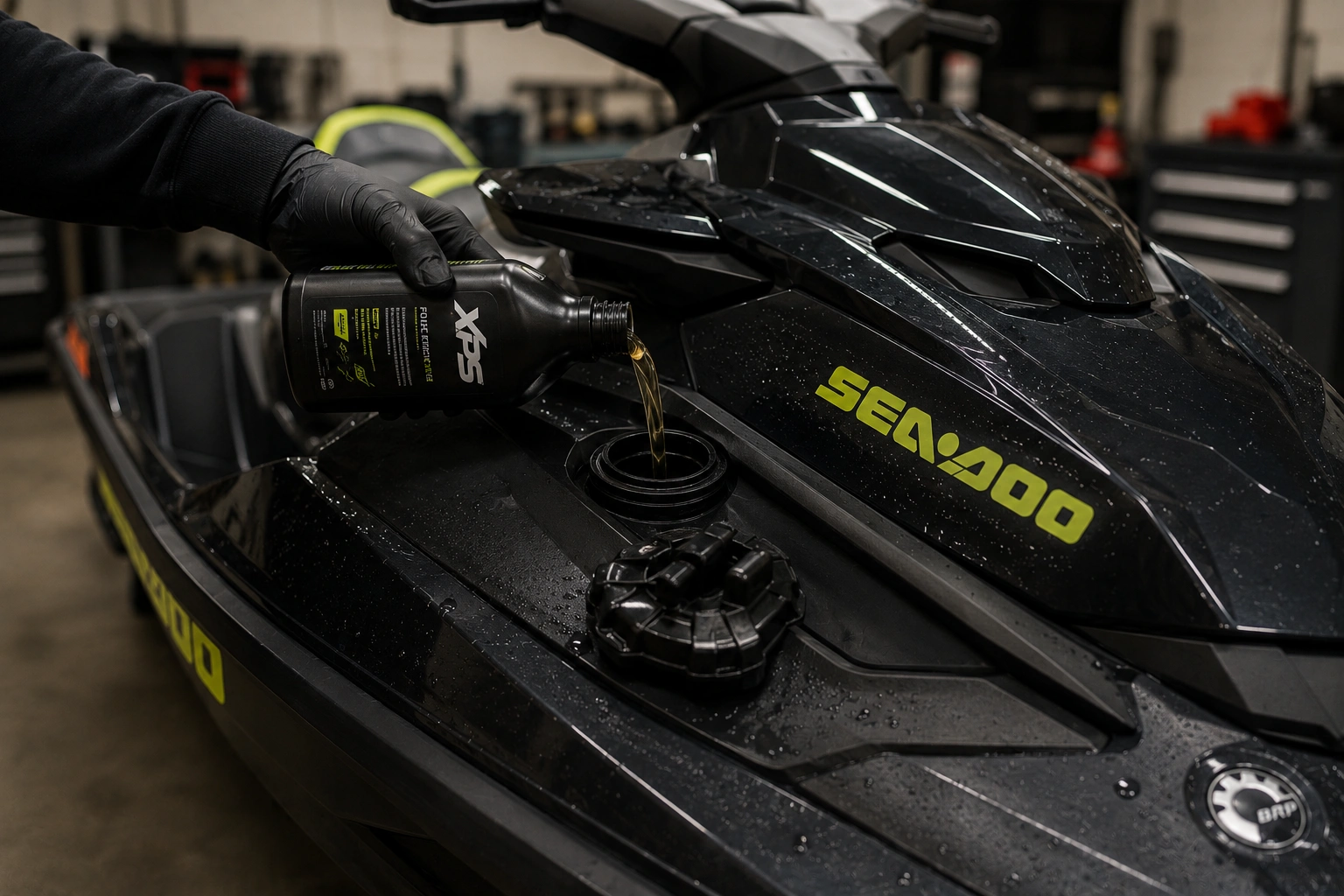
Fogging the Engine
Fogging oil is sprayed into the engine's intake or cylinders to coat internal components with a protective film.
This step matters because:
- It prevents surface rust from forming on cylinder walls over winter
- It protects internal seals and gaskets from drying out
- It leaves the engine easier to start again in spring
An engine that sits dry all winter, with no protective coating, is far more prone to internal corrosion than one that was fogged before storage.
Stabilizing the Fuel System
Gasoline degrades over time, especially fuel containing ethanol. Left in the tank for months, it can separate, gum up and leave deposits inside fuel lines, the fuel pump and injectors.
A proper winterization adds fuel stabilizer and runs the engine long enough to circulate it through the entire fuel system, not just the tank.
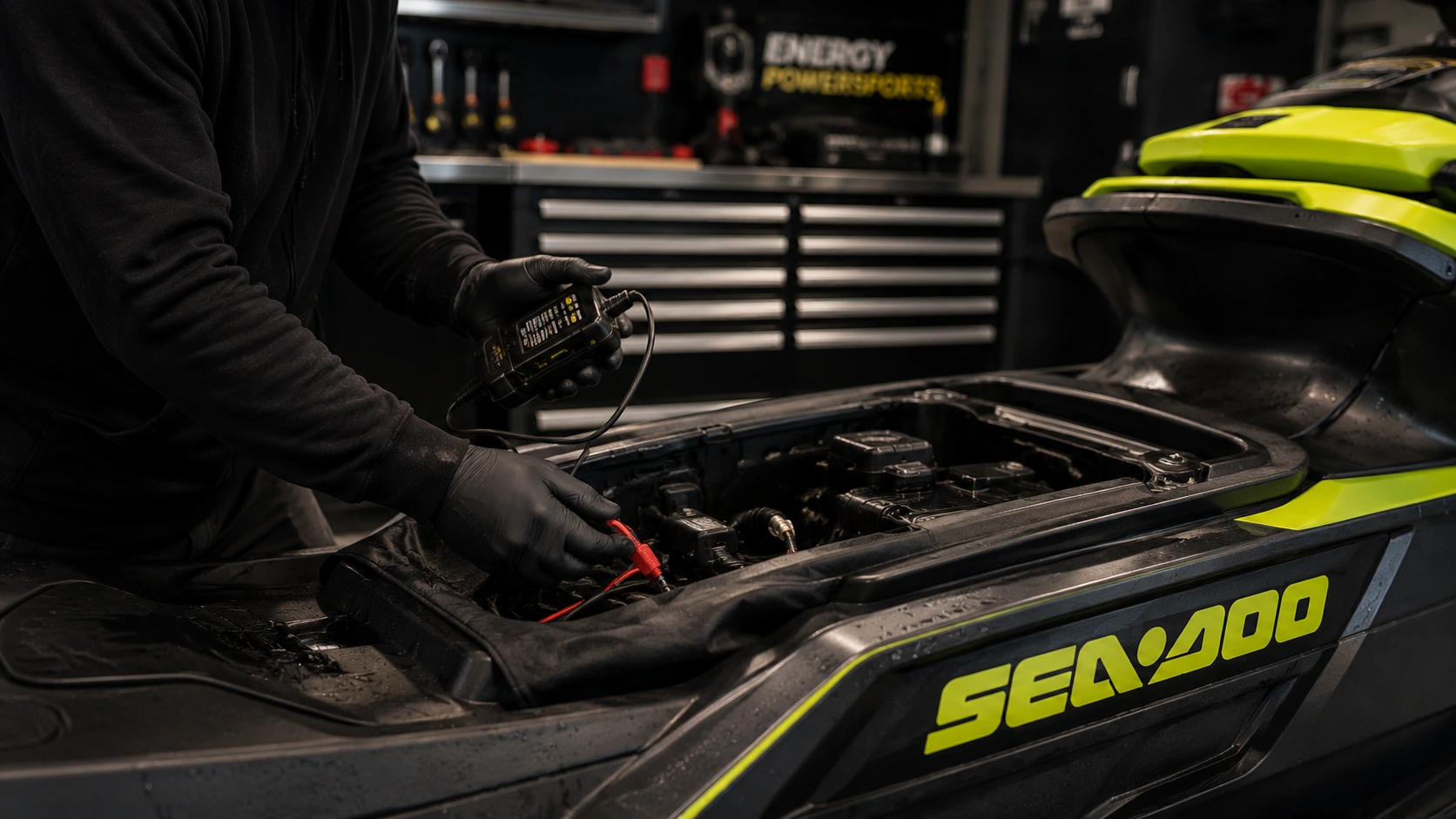
Battery Care
A battery left connected and unused over winter will slowly self-discharge, and a fully discharged battery can freeze internally and be ruined for good.
Battery care during winterization typically includes:
- Disconnecting the battery from the watercraft
- Charging it to full before storage
- Storing it in a temperature-controlled space, ideally on a maintenance charger
When you book with Energy Powersports, our team can handle every step of this for you, right down to recommending whether your battery needs to be replaced before next season.
Draining and Drying the Hull
Any water sitting in the bilge, ride plate area or storage compartments needs to be drained and dried out completely.
Moisture trapped inside a hull over winter is one of the most common causes of mildew, odour and corrosion on seats, upholstery and metal fasteners.
Lubrication and Corrosion Protection
Moving parts — steering cables, throttle linkages, the reverse system and other mechanical components — benefit from a fresh application of grease or corrosion-inhibiting spray before a long period of inactivity.
Cover and Storage
Once the mechanical work is done, how and where the Sea-Doo is stored still matters.
A watercraft stored:
- Indoors, in a heated or unheated but enclosed space, is generally best protected
- Outdoors under a proper fitted cover is the next-best option
- Outdoors uncovered is the most exposed to snow load, ice, UV damage and pests
What Can Go Wrong Without Winterization
Consider a Sea-Doo left in a driveway from October through April with no service performed.
In plain terms, here's what that neglect can lead to:
- Residual water in the cooling system freezes, and freezing water expands — a common cause of cracked engine or exhaust components
- Old fuel left sitting all winter breaks down and can clog injectors or the fuel pump come spring
- A battery left connected slowly drains, and a frozen, fully discharged battery often needs to be replaced entirely
- Trapped moisture inside the hull promotes mildew and odour that can be difficult to fully remove
By comparison, a Sea-Doo that was flushed, fogged, stabilized, and stored with a charged battery and a proper cover is far more likely to start reliably and run cleanly on its first outing next season.
Don't Wait for the First Frost to Call Us
Cooling system damage from freezing isn't limited to the depths of January — a single hard overnight frost is enough to crack a component if water is still sitting inside the engine.
That means the best time to book with Energy Powersports is now, as the riding season winds down, rather than waiting for the first real cold snap. Our service bay fills up quickly once temperatures start dropping across Oakville and Halton, so calling or stopping in early is the easiest way to guarantee you get an appointment before the cold weather arrives — and to avoid the rush that hits every shop in the region come late fall.
Why Oakville Riders Choose Energy Powersports for Winterization
Winterizing a personal watercraft involves fuel system work, cooling system flushing, and precise fogging procedures that vary by engine and model year. Get any one of those steps wrong, and you can end up with exactly the kind of damage winterization is supposed to prevent.
That's why so many Sea-Doo owners in Oakville bring their units to Energy Powersports instead of tackling it in the driveway. Our technicians work on Sea-Doos every day, know the specifics of each model year, and follow Sea-Doo's own recommended procedures rather than a generic checklist.
When you book a winterization appointment with us, you also get:
- A trained technician who knows your specific Sea-Doo model, not a one-size-fits-all approach
- A full inspection of wear items like the drive system, impeller condition and general hull condition, so you know what to expect next season
- Genuine parts and fluids if anything needs to be replaced along the way
- A convenient, local shop in Oakville, so you're not driving across the GTA for service
- The peace of mind of dropping it off and picking up a Sea-Doo that's truly ready for storage
Come See Us in Oakville
The easiest way to protect your Sea-Doo this winter is to bring it to the people who work on them every day. Whether you ride a Spark, GTI, RXP, Fish Pro or anything else in the lineup, our service team will flush, fog, stabilize, inspect and store-prep your watercraft so it's ready to launch the moment the water opens up next spring.
Book your Sea-Doo winterization appointment today:
Energy Powersports 879 Cranberry Court Oakville, Ontario 905-901-5500
Give us a call or stop by in person — our service team is ready to get your Sea-Doo winter-ready before the cold weather catches up to it.
Frequently Asked Questions About Sea-Doo Winterization
Do I really need to winterize my Sea-Doo if I store it indoors? Yes. Indoor storage helps protect against snow, ice and UV exposure, but it doesn't address water left in the cooling system, degrading fuel, or a battery that slowly discharges over winter. Those steps are needed regardless of where the unit is stored, and Energy Powersports can handle all of them in one appointment.
What happens if water is left in the engine over winter? If temperatures drop low enough, that water can freeze and expand, which can crack the engine block, exhaust components or cooling passages. Our technicians make sure the cooling system is fully flushed and cleared before your Sea-Doo goes into storage.
How long does a Sea-Doo winterization appointment take? This varies by model and what else is being inspected. Give us a call at 905-901-5500 or stop by in store and we can walk you through current scheduling and turnaround times.
Should I remove the battery myself before bringing it in for service? You don't need to — the Energy Powersports service team can handle battery disconnection, charging and storage recommendations as part of the winterization appointment.
Can I still winterize my Sea-Doo if I waited until it's already cold out? It's best to have it done before the first hard freeze, but bring it in to Energy Powersports as soon as possible if you've waited — the sooner any residual water is cleared out, the lower the risk of cold-weather damage.
Does winterization include a full inspection? Yes. A winterization appointment at Energy Powersports includes a look at other wear items like the drive system and impeller, giving you a clearer picture of what your Sea-Doo may need before next season.
Where is Energy Powersports located? We're located at 879 Cranberry Court in Oakville, Ontario, easily reachable for Sea-Doo owners across Oakville, Burlington, Mississauga and the wider GTA. Call us at 905-901-5500 or stop by in person to book your winterization appointment.
Service details, included steps and turnaround times can vary by model and season. Contact Energy Powersports directly to confirm what's included in your winterization appointment.
