
How to Ride a Snowmobile: A Step-by-Step Beginner's Guide for Your First Ride on Ontario Trails

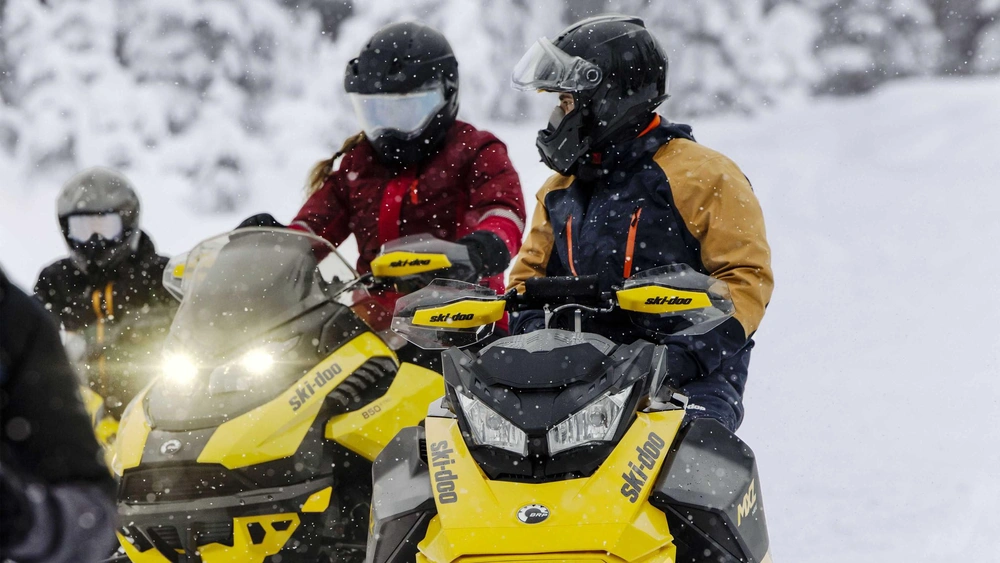
To ride a snowmobile, learn the four main controls (start button, throttle, brake and kill switch), practise in an open, flat area, sit with your knees slightly bent and both feet on the running boards, squeeze the throttle smoothly, lean slightly into turns and brake gently to stop. Ski-Doo recommends building confidence on groomed trails before trying varied terrain, and always riding with a partner. In Ontario, you also need a licence, registration, insurance, an approved helmet and, on OFSC trails, a valid trail permit.
Key Takeaways
- A snowmobile has four main controls: the start button, the throttle (right thumb lever), the brake (left-hand lever) and the red kill switch that shuts off the engine instantly, according to Ski-Doo.
- Ski-Doo says sitting is the most common position for new riders, with a slight bend in the elbows and knees and both feet on the running boards.
- To turn a snowmobile, lean slightly into the turn and keep a steady throttle; to stop, ease off the throttle and brake gently.
- In Ontario, riders 16 and older need a driver's licence or MSVOL, riders 12 to 15 need an MSVOL to ride trails, and children under 12 may ride only on private property.
- The maximum speed limit on Ontario snowmobile trails is 50 km/h, and riders must stay on the right-hand side of the trail.
- Ski-Doo recommends practising in an open, flat space before riding a trail and never riding alone.
Picture your first time on a sled. You're at a friend's cottage near Creemore, the trail behind the property is freshly groomed, and the snowmobile is warmed up and waiting. Everyone else has been riding for years. Fifteen minutes of learning the basics in the field first is what turns a nervous first ride into the start of a favourite winter hobby.
New riders come into our Collingwood location every winter, from families new to the Blue Mountains to cottagers in Grey County who just bought their first sled. Riders near our Oakville location often learn on a weekend trip north to Simcoe County, Muskoka or the Haliburton Highlands. Wherever you start, the basics are the same.
This guide covers the controls, riding positions, turning, hills, braking, hand signals, what to wear, Ontario's rules and trail etiquette, in the order you'll need them. Stock up on Ski-Doo clothing and snowmobile helmets before your first ride. We finish with common beginner mistakes and answers to common questions.
What Do You Need Before Your First Snowmobile Ride?
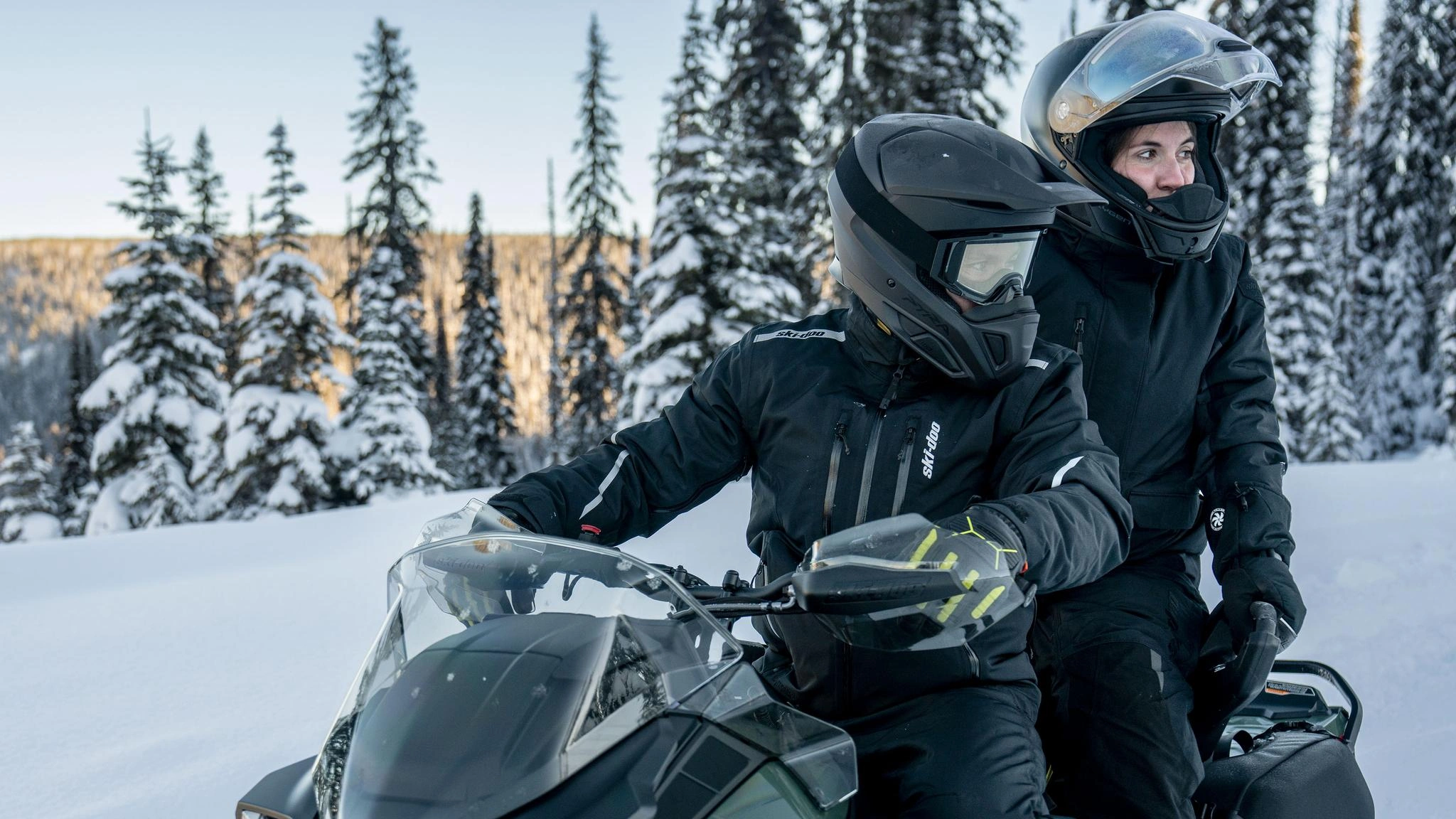
Before your first snowmobile ride, you need the right licence for your age, proof of registration and insurance, an approved snowmobile helmet, warm layered clothing and a riding partner. The Government of Ontario also recommends taking a snowmobile safety course and telling someone where you're going and when you plan to arrive.
- A licence. In Ontario, drivers must carry a valid driver's licence, a motorized snow vehicle operator's licence (MSVOL) or a snowmobile licence from their home province, state or country.
- Registration and insurance. Carry the snowmobile registration permit and proof of insurance on every ride.
- An approved helmet. Drivers and passengers must wear a snowmobile helmet that meets Ontario's standards, with the chin strap fastened.
- A trail permit. OFSC trails require a valid trail permit displayed on the snowmobile.
- A partner. Ski-Doo calls riding alone unsafe and says to always ride with someone.
How Old Do You Have to Be to Drive a Snowmobile in Ontario?
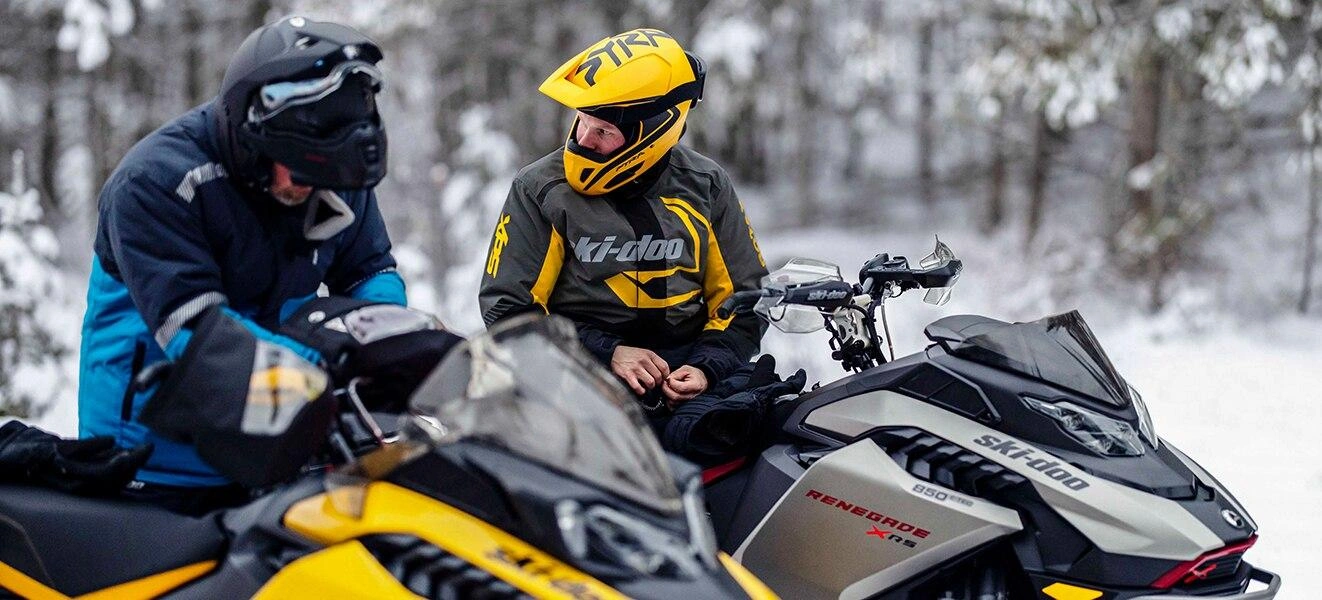
You must be at least 12 years old to drive a snowmobile on Ontario trails, and only with an MSVOL. Riders 16 and older can use a valid Ontario driver's licence or an MSVOL, while children under 12 may drive only on private property and are not permitted on public trails, according to the Government of Ontario.
| Age | Licence needed | Where you can drive |
|---|---|---|
| 16 and older | Ontario driver's licence, MSVOL or a snowmobile licence from another jurisdiction | Snowmobile trails, across roads and alongside roads where permitted, private property |
| 12 to 15 | MSVOL or a licence from another jurisdiction | Snowmobile trails and private property |
| Under 12 | None | Private property only |
The MSVOL is issued by the Ontario Federation of Snowmobile Clubs (OFSC) after its online driver training course, which is required for riders 12 and older who want to ride Ontario trails without a driver's licence. BRP strongly recommends that snowmobile operators be at least 16 years old. For younger riders, our guide to youth snowmobiles explains how to size a sled to the rider.
What Should You Wear to Ride a Snowmobile?
You should wear an approved snowmobile helmet, goggles or a visor, and three layers of clothing: a moisture-wicking thermal base layer, an insulating middle layer and a waterproof outer layer. Ski-Doo also recommends a balaclava or neck warmer to keep cold air out.
- Helmet and eye protection. An approved helmet is the law in Ontario, and goggles or a visor protect your eyes from wind, snow and branches.
- Base layer. A thermal base layer moves sweat away from your skin so you stay warm and dry.
- Insulating layer. Fleece or a light insulated jacket traps body heat.
- Waterproof outer layer. A snowmobile jacket and bibs block wind and snow.
- Boots and gloves. Insulated, waterproof boots and gloves or mitts keep your hands and feet warm, and they matter more than anything else on a long ride.
Our snowmobile safety essentials guide covers what to carry on every ride.
What Are the Controls on a Snowmobile?
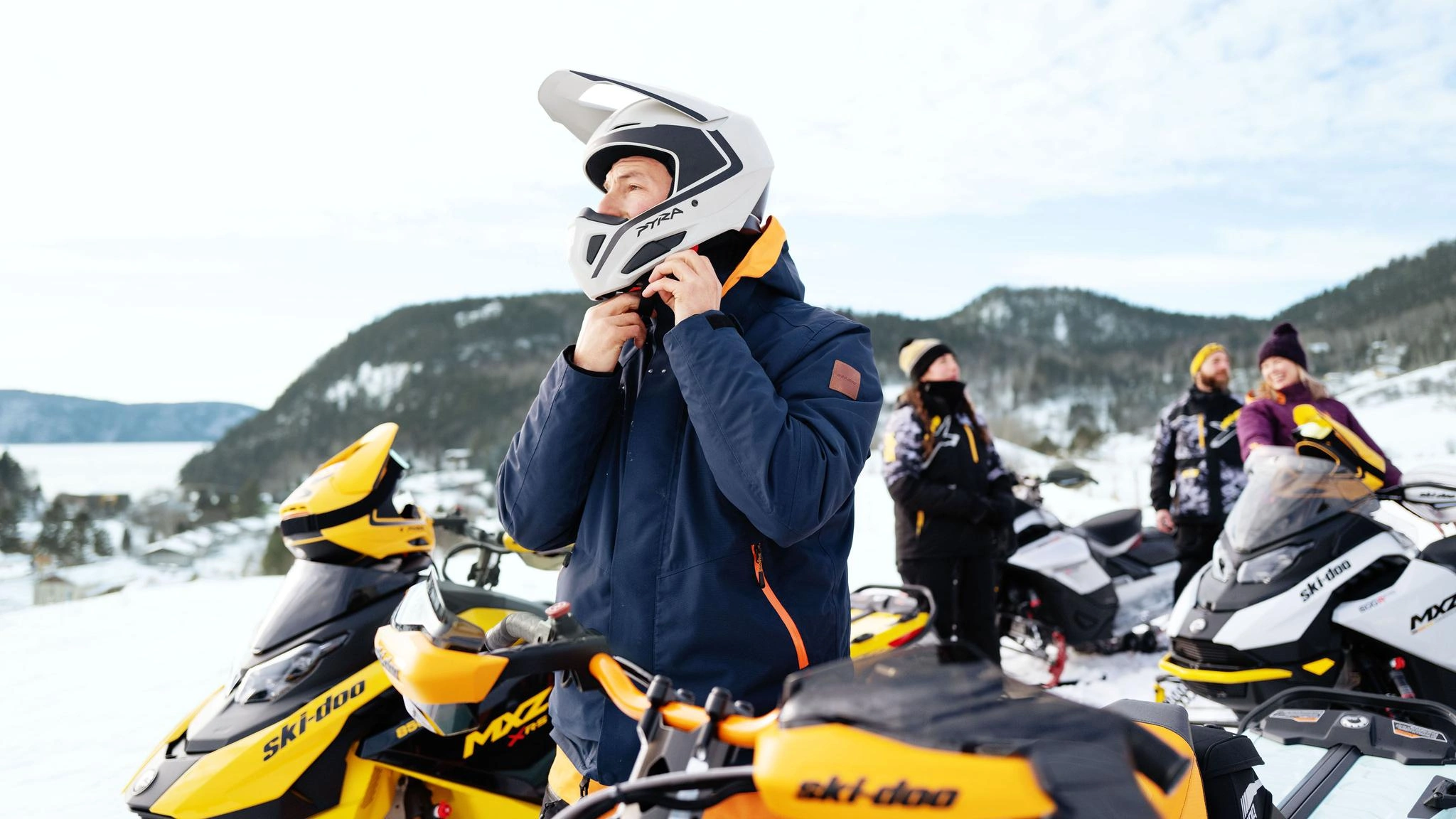
A snowmobile has four controls you need to know before your first ride: the start button, the throttle, the brake and the kill switch. Ski-Doo says the throttle and brake are the two controls you'll use constantly throughout the day.
| Control | Where it is | What it does |
|---|---|---|
| Start button | Handlebar or dash | Starts the engine on sleds with electric start |
| Throttle | Right handlebar, worked with your right thumb | Controls speed: squeeze to go, release to slow |
| Brake | Left handlebar lever | Slows and stops the snowmobile |
| Kill switch | Red button on the handlebar | Shuts off the engine instantly in an emergency |
Ski-Doo also recommends learning the headlight high and low switch, the handlebar and thumb warmer controls and the dash display before you head out. Every model is a little different, so read the operator's guide for your sled, and ask our team to walk you through the controls when you pick it up.
How Do You Ride a Snowmobile Step by Step?
To ride a snowmobile step by step, check the sled, get into position, start the engine, squeeze the throttle smoothly and practise turning and stopping in an open area before you ride a trail. These steps follow Ski-Doo's advice for first-time riders.
- Do a pre-ride check. Ski-Doo says to check the fuel, oil, track, lights, throttle and brake before every ride. Make sure the throttle springs back when you let go.
- Plan your route. Stick to marked trails, carry a map or GPS, and tell a friend or family member your route and when you'll be back.
- Get into position. Sit with both hands on the handlebars, a slight bend in your elbows, both feet on the running boards and your knees bent. From here, you should be able to turn the handlebars fully left and right.
- Start the engine. Make sure the kill switch is in the run position, then start the snowmobile and let it warm up.
- Squeeze the throttle slowly. The throttle is very responsive, so press it gradually with your right thumb and keep your speed low at first.
- Practise in an open, flat area. Ski-Doo recommends practising in an open, flat space, such as a snow-covered field with permission, before you ride a trail.
- Practise turning and stopping. Make wide, slow turns in both directions, then practise easing off the throttle and braking gently to a stop.
- Move to groomed trails. Build confidence on groomed trails before you try varied terrain, according to Ski-Doo.
How Do You Turn a Snowmobile?
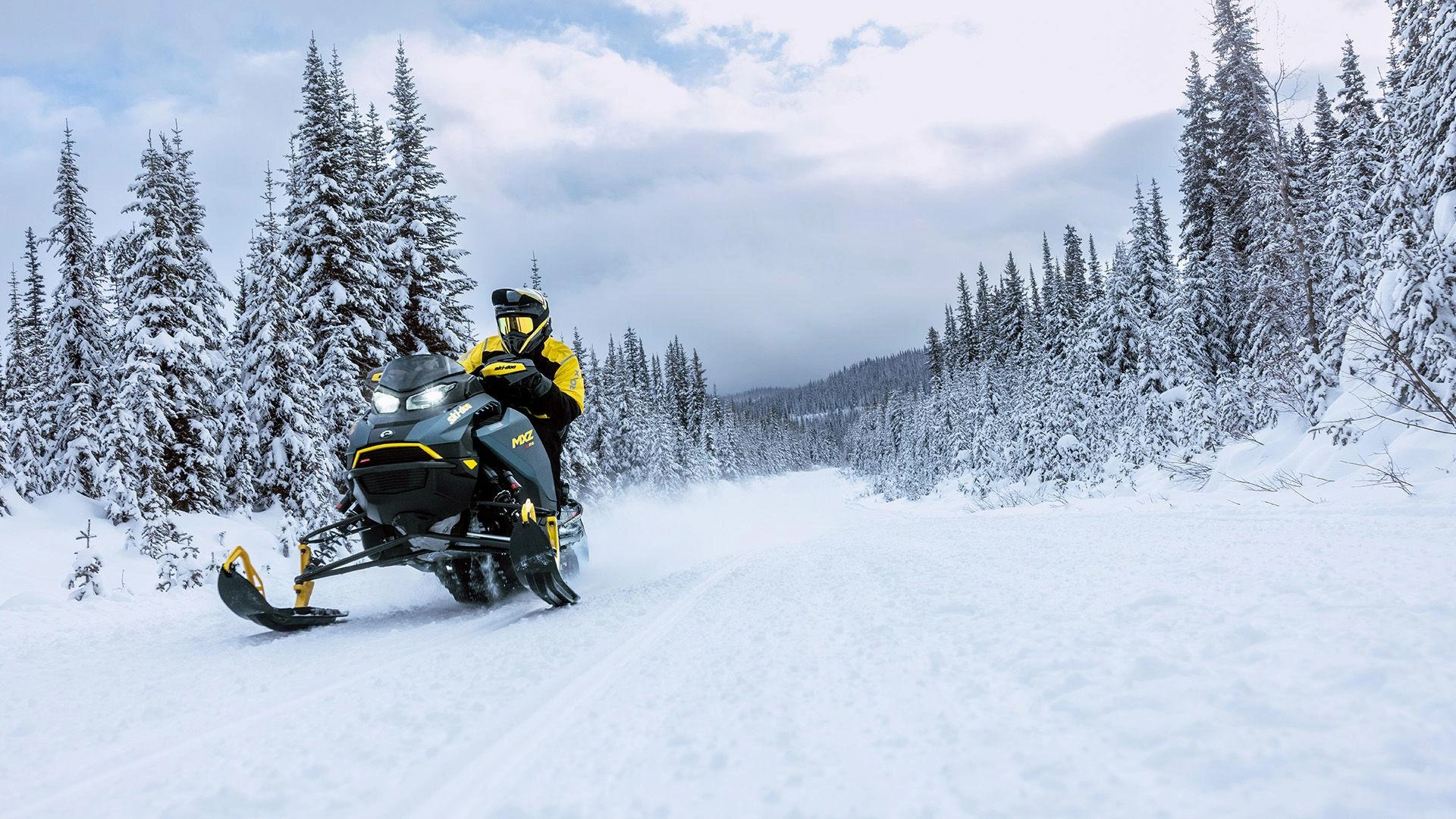
You turn a snowmobile by steering with the handlebars, leaning slightly into the turn and keeping a steady throttle. Ski-Doo's beginner guide sums it up as "lean slightly and keep a steady throttle." Shifting your weight toward the inside of the turn helps the skis grip and keeps the snowmobile flat.
- Slow down before the corner, not in it. Brake on the straight, then turn.
- Look where you want to go. Your eyes lead your body and the sled.
- Keep a steady throttle through the turn. Letting off suddenly mid-corner can make the sled push wide.
How Do You Ride a Snowmobile Up and Down Hills?
To ride a snowmobile up a hill, shift your weight forward; to go down a hill, lean back and brake carefully. That is Ski-Doo's advice for beginners. Keep a steady speed on the climb so you don't bog down halfway up, and keep your speed under control on the way down by braking early and gently.
How Do You Stop a Snowmobile Safely?
You stop a snowmobile safely by easing off the throttle first and then squeezing the brake lever gently with your left hand. Snowmobiles slow down on their own when you release the throttle, so plan your stops early, leave lots of room and avoid grabbing the brake hard on ice or hard-packed snow. In an emergency, the red kill switch shuts the engine off instantly.
Should You Sit or Stand on a Snowmobile?
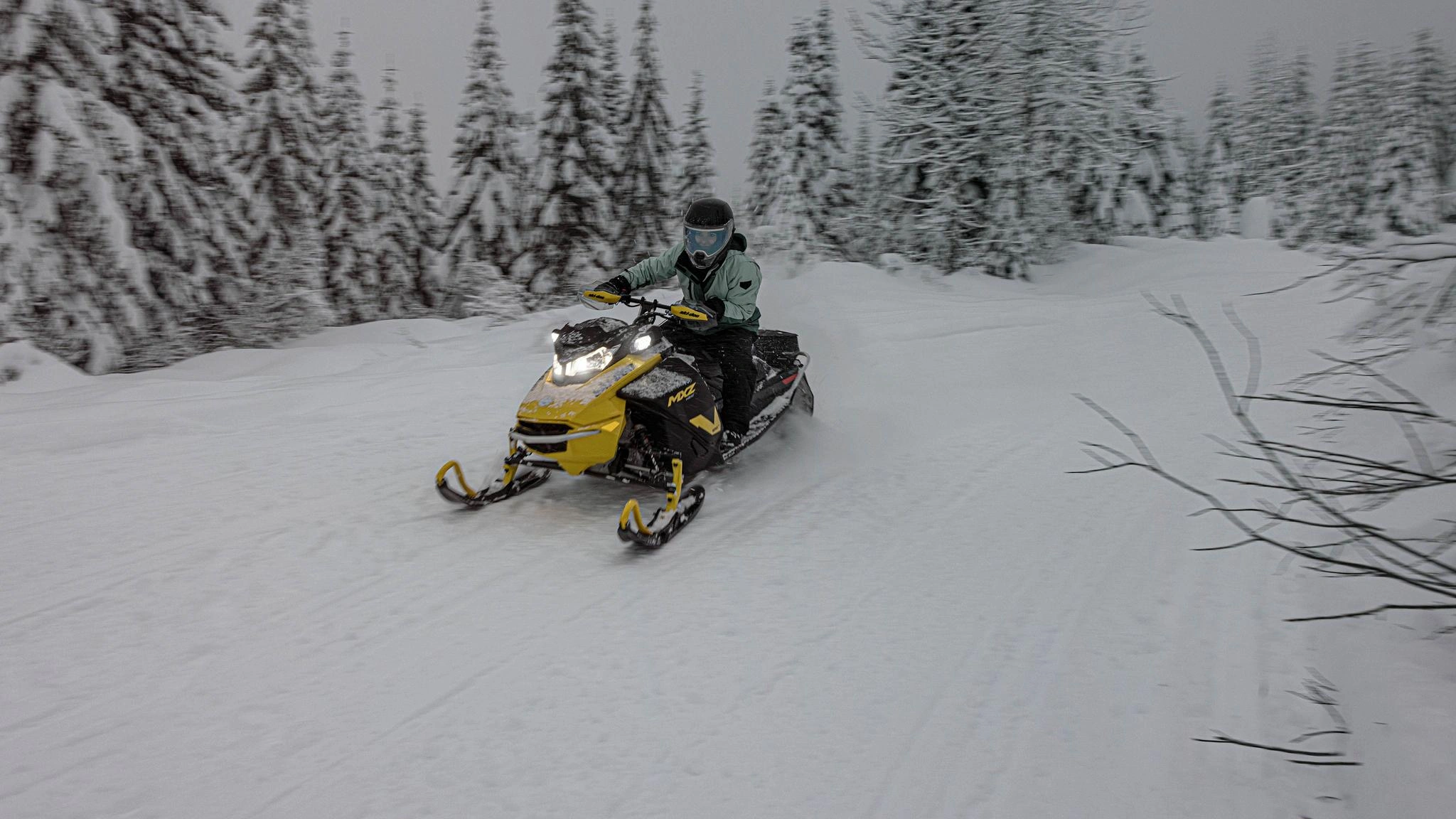
Sitting is the best position for beginners, and standing helps on bumpy trails or rough terrain. Ski-Doo says sitting is the most common position for new riders, and that riders may find standing more comfortable on bumpy trails. When you stand, keep both hands on the handlebars and both feet firmly on the running boards, with your knees bent to absorb the bumps.
What Are the Snowmobile Hand Signals?
Snowmobile hand signals let riders tell each other and oncoming sleds what they're doing, and Ski-Doo says to use hand signals to show turns and stops. These are the common signals used by snowmobilers across North America, shown with the left arm because the right hand stays on the throttle.
| Signal | How to do it |
|---|---|
| Stop | Raise your left arm straight up |
| Left turn | Hold your left arm straight out to the side |
| Right turn | Raise your left forearm straight up with the elbow bent at shoulder height |
| Slowing down | Hold your left arm out and down, moving it up and down |
| Sleds following | Raise your left arm and point your thumb back over your shoulder |
| Last sled in line | Show a closed fist so riders coming the other way know no more sleds are behind you |
Go over the signals with your group before you leave, so everyone knows what they mean.
What Are the Rules on Ontario Snowmobile Trails?
The main rules on Ontario snowmobile trails are to stay on the trail, ride on the right-hand side, keep to 50 km/h or less, and come to a complete stop before entering any road. These come from the Government of Ontario's snowmobile safety page.
- Speed limits. The maximum is 50 km/h on snowmobile trails and alongside roads with limits over 50 km/h, and 20 km/h alongside roads with limits of 50 km/h or less and in public parks.
- Roads and railways. Stop completely before entering any roadway, and take extra care crossing roads and railway tracks. Snowmobiles are not allowed on 400-series highways or on the pavement and plowed shoulders where cars drive.
- Private property. Never ride on private property without the owner's permission.
- Trail status. Always check trail availability before entering any trail, using the OFSC Interactive Trail Guide.
- Ice. The Government of Ontario says travelling on ice is risky and should be avoided. If you must cross ice, check with the local club first and wear a flotation suit or personal flotation device and carry ice picks.
- Impaired riding. Riding while impaired by alcohol, drugs or medication is illegal and carries the same penalties as impaired driving.
What Are the Most Common Beginner Snowmobile Mistakes?
The most common beginner snowmobile mistakes are riding alone, riding too fast, skipping the pre-ride check and riding beyond your ability. Ski-Doo lists the first three as the mistakes that cause the most trouble.
- Riding alone. Ski-Doo calls it unsafe; always ride with someone.
- Riding too fast. Speed means less control and more risk of a crash.
- Skipping checks. A missed problem can leave you stranded far from help.
- Riding beyond your limits. Ski-Doo says to always ride within your abilities and build up gradually.
- Not dressing in layers. Getting cold or wet makes even a short ride miserable.
Learning to Ride Near Our Oakville and Collingwood Locations
Collingwood, Grey County and the Blue Mountains
New riders near our Collingwood location are close to some of southern Ontario's most reliable snow, with local OFSC club trails around Collingwood, Wasaga Beach, Stayner and Creemore. Our guide to snowmobile trails near Collingwood lists the clubs and where their trails go, so you can plan an easy first ride.
Oakville, Halton and the GTA
Riders near our Oakville location usually learn on a trip north. Practise the basics in an open field at your destination before heading onto the trail, and check the OFSC Interactive Trail Guide before you leave home. If you're still choosing a first sled, our guide on how to choose the right snowmobile for Ontario trails is a good place to start.
Frequently Asked Questions
Is it hard to ride a snowmobile for the first time?
No, riding a snowmobile for the first time is not hard if you learn the controls and practise in an open, flat area first. Most beginners are comfortable on groomed trails after a short practice session, as long as they keep their speed low and ride with an experienced partner.
How do you start a snowmobile?
To start a snowmobile, make sure the red kill switch is in the run position, then press the start button on sleds with electric start. Let the engine warm up before you ride, and check your operator's guide, because starting steps vary by model.
How old do you have to be to drive a snowmobile in Ontario?
You must be at least 12 years old with an MSVOL to drive a snowmobile on Ontario trails. Riders 16 and older can use an Ontario driver's licence, and children under 12 may only ride on private property.
Do you need a licence to drive a snowmobile in Ontario?
Yes, you need a valid driver's licence, an MSVOL or a snowmobile licence from your home province, state or country to drive a snowmobile in Ontario, plus the registration permit and proof of insurance.
What is the speed limit on Ontario snowmobile trails?
The maximum speed limit on Ontario snowmobile trails is 50 km/h, according to the Government of Ontario. Slow down further for poor visibility, unfamiliar terrain and trail conditions.
What should a beginner wear to go snowmobiling?
A beginner should wear an approved snowmobile helmet, goggles, a thermal base layer, an insulating layer, a waterproof jacket and bibs, insulated boots and gloves, and a balaclava or neck warmer.
Where can I buy a Ski-Doo snowmobile and gear in Ontario?
You can buy new Ski-Doo and Lynx snowmobiles, helmets, clothing and parts at Energy Powersports in Oakville and Collingwood, Ontario, or shop gear online at shop.energypowersports.ca with Canada-wide shipping. Energy Powersports is an authorized BRP dealer.
Is there a Ski-Doo dealer near Wasaga Beach or the Blue Mountains?
Yes, Energy Powersports Collingwood at 180 Mountain Rd, Unit 101, is a Ski-Doo dealer close to Wasaga Beach, the Blue Mountains, Meaford and Owen Sound. Call 705-532-2277.
Visit Us
Oakville: 879 Cranberry Court, Oakville, Ontario, L6L 6J7. Call 905-901-5500.
Collingwood: 180 Mountain Rd, Unit 101, Collingwood, Ontario, L9Y 3Z9. Call 705-532-2277.
Start Your First Season the Right Way
Your first snowmobile season starts with the right sled, the right gear and a little practice. Browse new Ski-Doo and Lynx snowmobiles, shop Ski-Doo clothing, helmets and Ski-Doo parts online, book a pre-season check with our service department, or visit either location and our team will walk you through the controls of your new sled.
